Existing customer? Sign in
Are AI Companies Coming Together at Last? Industry Leaders Reacted After The Daily Show Episode
Jon Stewart’s October 2026 segment on The Daily Show (see our previous blog) satirised Silicon Valley's grand promises about artificial intelligence—such as curing diseases and creating an "age of abundance"—by contrasting them with its actual near-term applications like surveillance, drone warfare, and fast-food surge pricing.
Stewart challenged tech giants: (likening figures like Elon Musk and Mark Zuckerberg to individuals with a poor track record on safety) and mocked President Trump’s White House AI summit for letting AI companies self-regulate rather than imposing strict oversight. Stewart highlighted how AI insiders routinely admit there is a 10% to 25% chance the technology could lead to human extinction or catastrophic harm, asking what society is receiving in trade (e.g., automated tools and corporate cost-cutting). He questioned whether mass automation will actually benefit the public or merely concentrate wealth in the hands of capital owners, pointing out that current business implementations focus primarily on boosting productivity by replacing workers or driving dynamic pricing.
Industry Leaders React:
Salim Ismail, futurist, and technology strategist, Indo-Canadian serial entrepreneur, best known for the bestselling business book Exponential Organizations and an investor in tech-focused companies, including artificial intelligence, reacted by saying that The Daily Show got a lot of it right by asking the right questions, but according to him, Jon Stuart came to the wrong conclusions.
Salim addresses Silicon Valley's credibility problem with this question: “Why are you racing if you think we will be killed? And if you don’t believe that, then stop this apocalyptic rhetoric." Then he carries on to give his perspective on the apocalyptic issue, saying that humans have lived on earth for 4 billion years. “Human beings are ridiculously adaptable and actually quite difficult to kill,” he postulates. He admits that AI could have catastrophic risks which we should take seriously but “not be hypnotised by them. Humanity is not a fragile vase sitting on a table, waiting for an algorithm to knock it over.” Then he says that “for such an extraordinary claim that we will be wiped out, we need extraordinary evidence.”
Salim then further disagrees that slowing down is a viable strategy, “we can’t put the math back in the bottle.” He carries on to say that Stuart is right to mock the idea that there will always be jobs. “Maybe job loss is not a catastrophe. The mechanism needs to change… The question is not how do we stop AI, but how do we constrain the harmful applications while radically expanding the access to the beneficial ones?”
Salim agrees that we should not allow these companies to regulate themselves. He says the conversation we should be having is: “What happens to income, companies, meaning, purpose and society when the jobs disappear? The real quest is not how do we save all jobs, but what does society look like when intelligence and coordination stop being scarce? It is not about jobs, it is maybe the beginning of the next economic system. Thát is the conversation we should be having. That is the shift.”
Meanwhile Dario Amodei of Anthropic came forward in a recent essay with a surprising statement, saying: “We must pace the frontier.”
He declared that the AI companies should deliberately slow down on how fast they make these models smarter as safety work cannot keep up with this rate of growth. Amodei made 3 suggestions:
- Anthropic will give outside evaluators insight into Anthropic systems to see what is going on inside
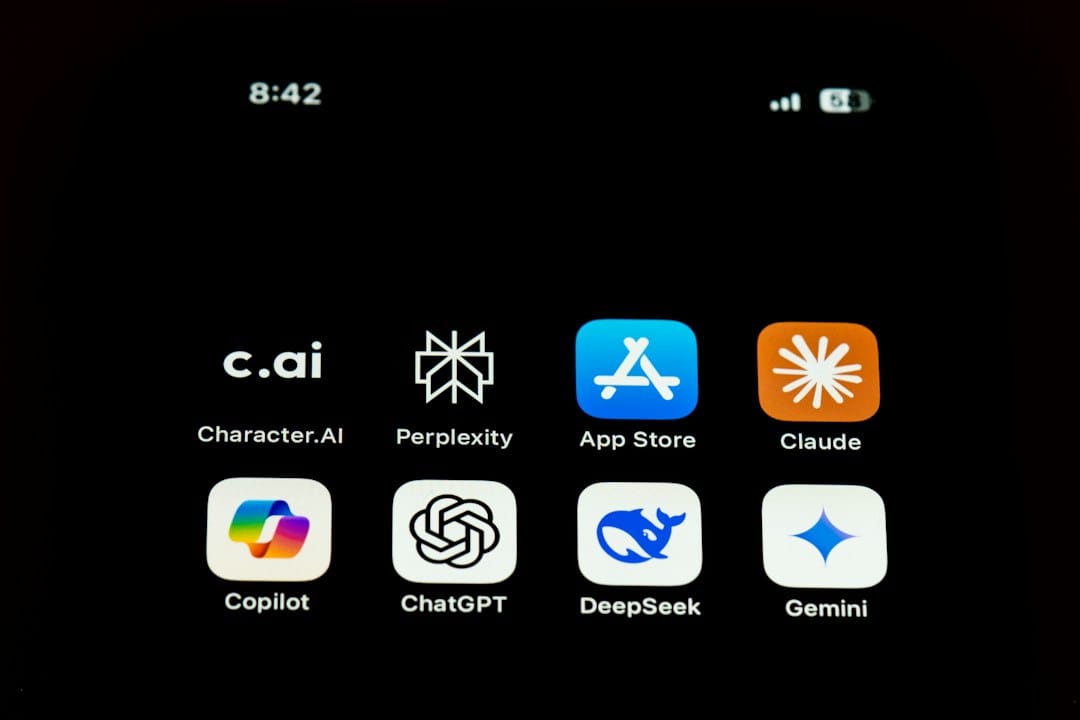
- Frontier AI companies (Gemini, Open AI, Meta, Grok, Perplexity, Apple Intelligence, Claude) should coordinate directly with each other on safety standards. Currently every lab is doing its own thing.
- This coordination needs to go global. Actual international rules need to be in place with global policies.
Sam Altman and Elon Musk agreed with Amodei.
Conclusion
Call me a sceptic, but when people have invested money, time and effort in an industry, can we even believe a word when they say: "We will coordinate with each other”? And when they say: “Everything will be okay; humans have been here for 4 billion years, they can adapt,” does that bolster our trust in the wisdom of their technology, especially when they say things like “We first need extraordinary evidence that this will lead to disaster.” ?Or when they say: “Humans are actually quite difficult to kill,” and then in the same breath: “Yes, AI could create catastrophic harm and cause huge damage.”
Can we trust that they will suddenly slow down, work together, ‘self-regulate’, and put our safety first? They have not done any of that so far—not a single one—and now they have probably raced too far ahead for any of that to be applied, anyway.
My questions are: What is the use of all the positives AI can bring, when we will be facing extinction in the end? How will we regulate the ‘bad’ things if we cannot regulate the source?
Watch the Salim Ismail video here:
Jon Stewart Is Right About AI And Wrong
Run your business, your way.
Your business is unique, but your software is off the shelf? Ditch the workarounds and let's build your ERP systems to fit your teams.